The head shrine of the more than 1,300 Sengen shrines across Japan, and a component part of a World Cultural Heritage site, known for a main hall built by Tokugawa Ieyasu, the Special Natural Monument Wakutama-ike pond, and over 500 cherry trees.
The head shrine of Mount Fuji worship
Fujisan Hongu Sengen Taisha is the head shrine of the more than 1,300 Sengen shrines found throughout Japan, and it also served as the ichinomiya, or first-ranked shrine, of the old province of Suruga. The enshrined deity is Konohanasakuya-hime-no-mikoto. The shrine is said to have begun when Asama-no-Okami was enshrined to calm the repeated eruptions of Mount Fuji, and in 806 Sakanoue no Tamuramaro built the shrine halls on the present site of Omiya, moving the deity here from Yamamiya. Everything above the eighth station of Mount Fuji is also precinct land of the shrine's inner sanctuary (okumiya), and the shrine is one of the component parts of the World Cultural Heritage site Fujisan, sacred place and source of artistic inspiration.
The halls and tower gate built by Tokugawa Ieyasu
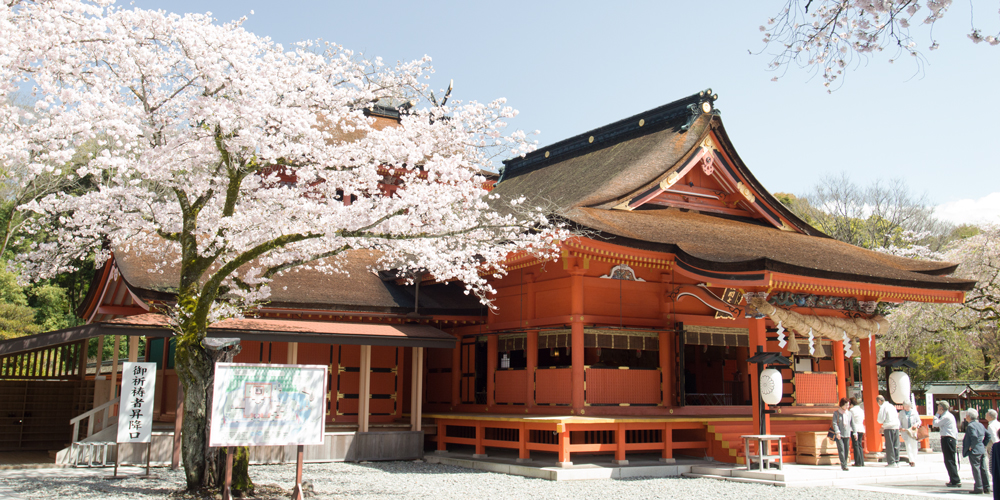
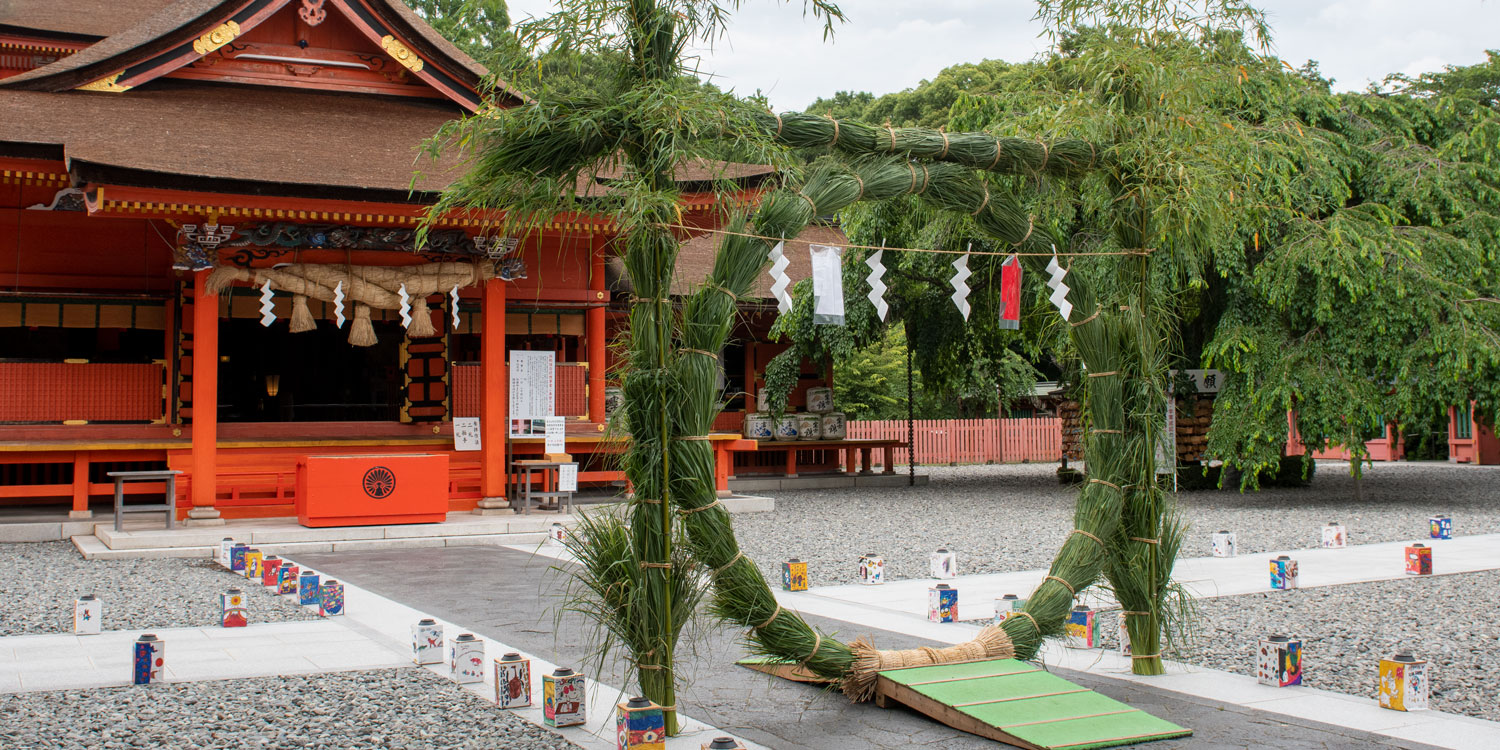
At the heart of the roughly 17,000-tsubo precinct stand the shrine halls erected by Tokugawa Ieyasu in 1604. The main hall is a two-storied tower structure 45 shaku high, about 13.6 metres, built in a style called Sengen-zukuri that exists nowhere else, and it is designated an Important Cultural Property of Japan. The tower gate and worship hall, bearing an inscription dated 1614, are cultural properties designated by Shizuoka Prefecture. The approach that runs from the great torii past Kagami-ike pond and through the tower gate is short even at a leisurely pace, so the grounds are easy to walk in a single loop.
Wakutama-ike pond and 500 cherry trees
Just outside the east side gate lies Wakutama-ike, a pond where meltwater from Mount Fuji rises to the surface after filtering through layers of lava, designated a Special Natural Monument of Japan. The water holds steady at around 13 degrees Celsius all year, with roughly 300,000 tons welling up each day, and the pond is listed among the 100 Best Waters of the Heisei era. In earlier centuries, climbers performed a ritual purification here before setting out for the summit. Cherry blossoms are also treated as the sacred tree of the shrine because of the deity's name, and more than 500 cherry trees are planted in the grounds. They are usually at their best from late March to early April, when the cherry blossom festival is held.
How long to allow, and annual events
Entry to the grounds is free and the shrine is open every day of the year. Gates open from 5:00 to 20:00 between April and September, 5:30 to 19:30 in March and October, and 6:00 to 19:00 between November and February (as of 2026). The office that issues goshuin seals and amulets is generally open from 8:30 to 16:30. Allowing 40 minutes to an hour for the shrine and Wakutama-ike together lets you take your time. The grounds and the car park are busy during the Yabusame horseback archery festival from 4 to 6 May and the grand annual festival from 3 to 5 November, so please check the official website for details.
Getting there from our hotel
Our hotel is in Fuji City near the Fuji Interchange on the Tomei Expressway, about 20 minutes by car via the Nishi-Fuji Bypass. Parking at the shrine is paid: 200 yen per hour for a standard car, or 1,500 yen per day, and worshippers who leave within 30 minutes park free. Cars can enter between 5:00 and 19:00, and exit is possible around the clock. By train, the shrine is about a 10-minute walk from Fujinomiya Station on the JR Minobu Line.
Sources
- http://fuji-hongu.or.jp/sengen/
- http://fuji-hongu.or.jp/sengen/history/index.html
- http://fuji-hongu.or.jp/sengen/hongu/index.html
- http://fuji-hongu.or.jp/sengen/access/index.html
- https://www.city.fujinomiya.lg.jp/fujisan/llti2b0000001lsq.html
- https://fujinomiya.gr.jp/guide/175/
- https://ja.wikipedia.org/wiki/%E6%B9%A7%E7%8E%89%E6%B1%A0
- https://fujinomiya-foodvalley.jp/spot/5113.html
Information was accurate at the time of writing. Prices and opening hours may change — please check the official site before you go.